

Quick answer
Food events in london run year-round, anchored by permanent venues like Borough Market (open Tuesday to Sunday with late hours on Saturday) and punctuated by major festivals including Taste of London in June, the London Restaurant Festival each October, and monthly street-food gatherings at Maltby Street and Southbank. Most large-scale culinary festivals occur between May and October, while winter months feature indoor tastings, cheese fairs, and chocolate markets across Covent Garden, Greenwich, and King's Cross.
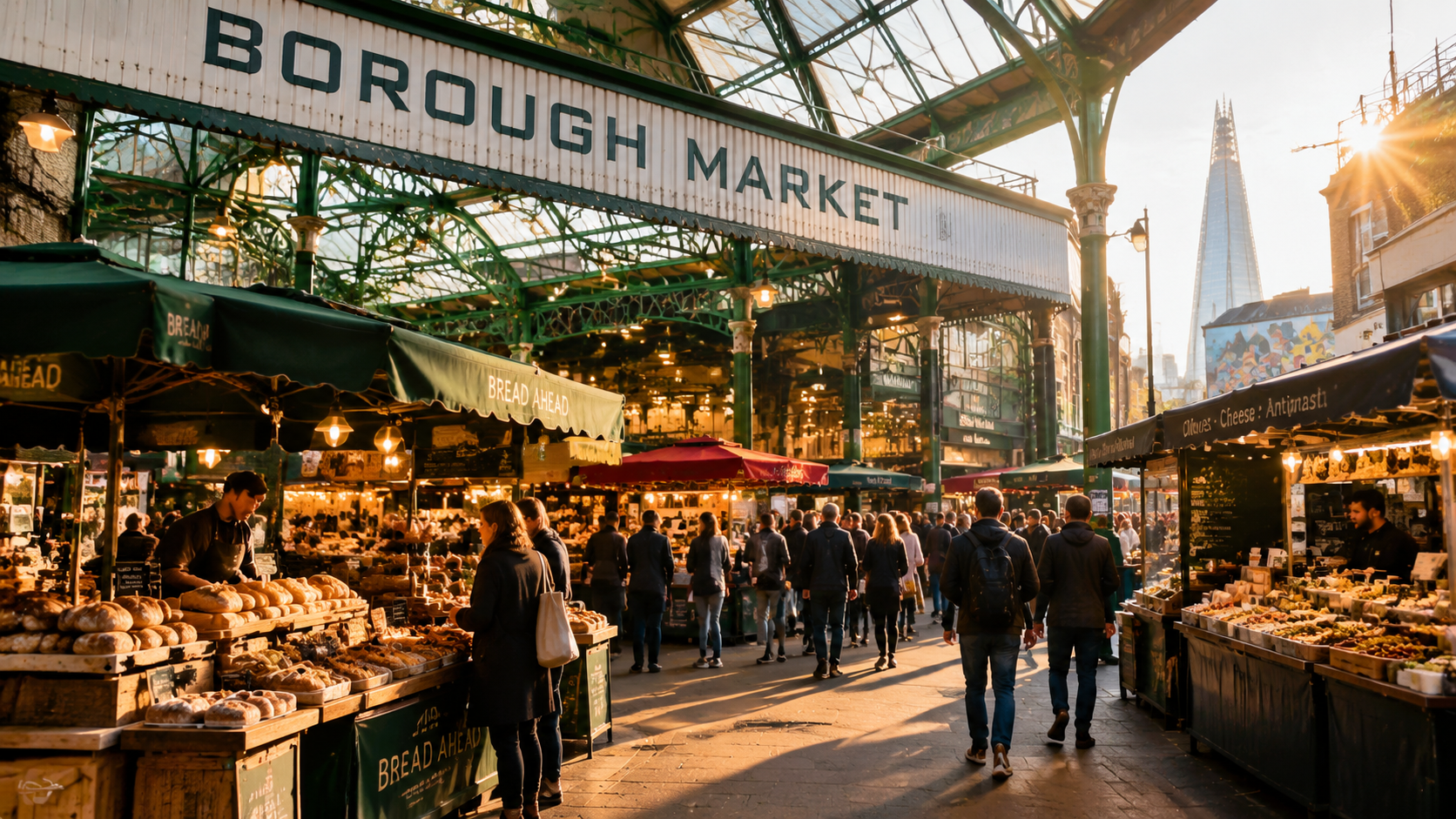
Borough Market operates as both a permanent food hall and an event anchor, hosting specialist producer showcases every first Thursday and seasonal night markets from May through September. The market's medieval lineage—trading continuously since 1756 on a site used for commerce since 1014—lends authority to its curator-led tastings and the quarterly Meet the Producer mornings that draw chefs and home cooks in equal measure. London's festival rhythm follows the growing season. Taste of London transforms Regent's Park each June into a five-day restaurant village where twenty kitchens serve tasting portions; tickets sell in tiers, but entry requires only general admission with dishes purchased separately using token cards. The London Restaurant Festival spans October, coordinating prix-fixe menus, masterclasses, and neighborhood food tours across more than four hundred participating venues. Pub gardens and brewery taprooms add their own layer, with the London Craft Beer Festival occupying Tobacco Dock each August and drawing seventy brewers under one Victorian warehouse roof. Street food operates on a fixed weekly rotation: Kerb runs lunchtime markets Monday through Friday at King's Cross and Seven Dials, while Maltby Street opens its railway-arch vendors Saturday and Sunday mornings. Southbank Centre Food Market anchors the riverfront Friday to Sunday year-round, and Flat Iron Square activates its courtyard Thursday evenings from April to September with live fire cooking and natural wine. These recurring markets require no tickets and no reservations; they function as open-access tastings with individual vendor menus posted the morning of service. Seasonal programming clusters around harvest and holiday windows. The Chocolate Festival occupies Southbank each December, the British Street Food Awards tour regional heats from June through August before the September finals, and the Affordable Art Fair includes a dedicated food-and-wine pavilion each spring and autumn. Advance booking is recommended for ticketed festivals but rarely required for markets, which operate on a walk-up basis and peak between noon and two o'clock.
“Borough Market has traded continuously since 1756 on a site used for commerce since 1014.”
Seasonal Food Events in London to Plan Around
London hosts a variety of recurring culinary festivals and seasonal food celebrations throughout the year. Planning your visit around these events allows you to experience the city's diverse gastronomic culture.
London Coffee Festival
This event showcases artisan coffee and global food vendors, drawing significant crowds to the East London area. Book travel and accommodation well in advance if visiting during this period.
Taste of London
Held in Regent's Park, this large-scale festival features prominent chefs and restaurant pop-ups. Expect high foot traffic and prioritize early reservations for nearby dining.
London Restaurant Festival
A city-wide celebration featuring special menus and culinary events across various establishments. It provides opportunities to explore the dining scene, though popular venues fill up quickly.
London Cocktail Week
This month-long series of events highlights the city's mixology scene with tastings and masterclasses. Many bars experience increased activity, making weeknight visits a practical strategy for avoiding peak congestion.
Best Time for Visiting Food Events in London
The best time to visit London for food events is during the shoulder months of May, June, September, and October. These periods offer a balance of temperate weather and a peak density of outdoor culinary festivals.
May to June
ModerateMild, 12°C to 20°C. Popular outdoor food festivals are in full swing.
Expect pleasant conditions and high availability of seasonal produce.
September to October
ModerateCooler, 11°C to 18°C. Ideal for harvest-themed food events.
The summer rush subsides while culinary events remain frequent.
Weekday mornings
Light—
Arrive early to explore the market and enjoy popular food stalls before the busy lunch-time crowds.
Verdict: Visit during May or September, and prioritize weekday mornings to experience food events and markets with manageable crowds.
Opening Hours for Major London Food Venues
Borough Market maintains consistent weekly operating hours for visitors exploring the London culinary scene. The market remains closed on Mondays, with standard hours Tuesday through Friday and early access on Saturdays.
| Monday | Closed | |
|---|---|---|
| Tuesday | 10:00–17:00 | |
| Wednesday | 10:00–17:00 | |
| Thursday | 10:00–17:00 | |
| Friday | 10:00–17:00 | |
| Saturday | 09:00–17:00 | |
| Sunday | 10:00–16:00 |
Entrance Fees for Food Events in London
Admission costs for London food events depend on the nature of the venue. While major public hubs provide open access, specialized festivals and private culinary gatherings often require ticketed entry.
Most public market access is free, while independent food events charge varying fees based on the specific program or experience selected.
Directions to Food Events in London Hubs
The primary hub for London's culinary scene is located at 8 Southwark Street, London, SE1 1TL. The most efficient way to access this area is via the extensive public transport network serving the Southwark and London Bridge district.
Jubilee or Northern Line to London Bridge Station
National Rail services to London Bridge Station
Routes 43, 149, or 381 to Southwark Street
Follow signs from London Bridge or Southwark Cathedral
Insider Tips for Navigating Food Events in London
Master the London culinary landscape by leveraging local strategies to bypass crowds and source authentic ingredients.
Prioritize peripheral stalls
Many visitors cluster at the main entrance, so head toward the outer edges to find established traders with shorter lines. These vendors often provide samples before you purchase a full portion.
Bring reusable containers
To minimize waste and facilitate easy transport of varied tastings, bring your own food containers. This approach is welcomed by many vendors and makes navigating crowded event spaces significantly easier.
Engage with traders
Ask vendors about the provenance of their ingredients or specific preparation methods. Traders are often willing to share details on seasonal produce that you might otherwise overlook in the rush.
Utilize side entrances
When accessing major venues like 8 Southwark Street, use the lesser-known pedestrian entrances near the railway arches to bypass the primary high-traffic thoroughfares. This often saves time during peak morning periods.
Plan your route
Study the market map online at https://boroughmarket.org.uk before arriving to pinpoint specific stalls of interest. Focusing on a dedicated route prevents aimless walking through dense crowds.
Check availability
Frequently Asked Questions About Food Events in London
Everything you need to know about food events in london